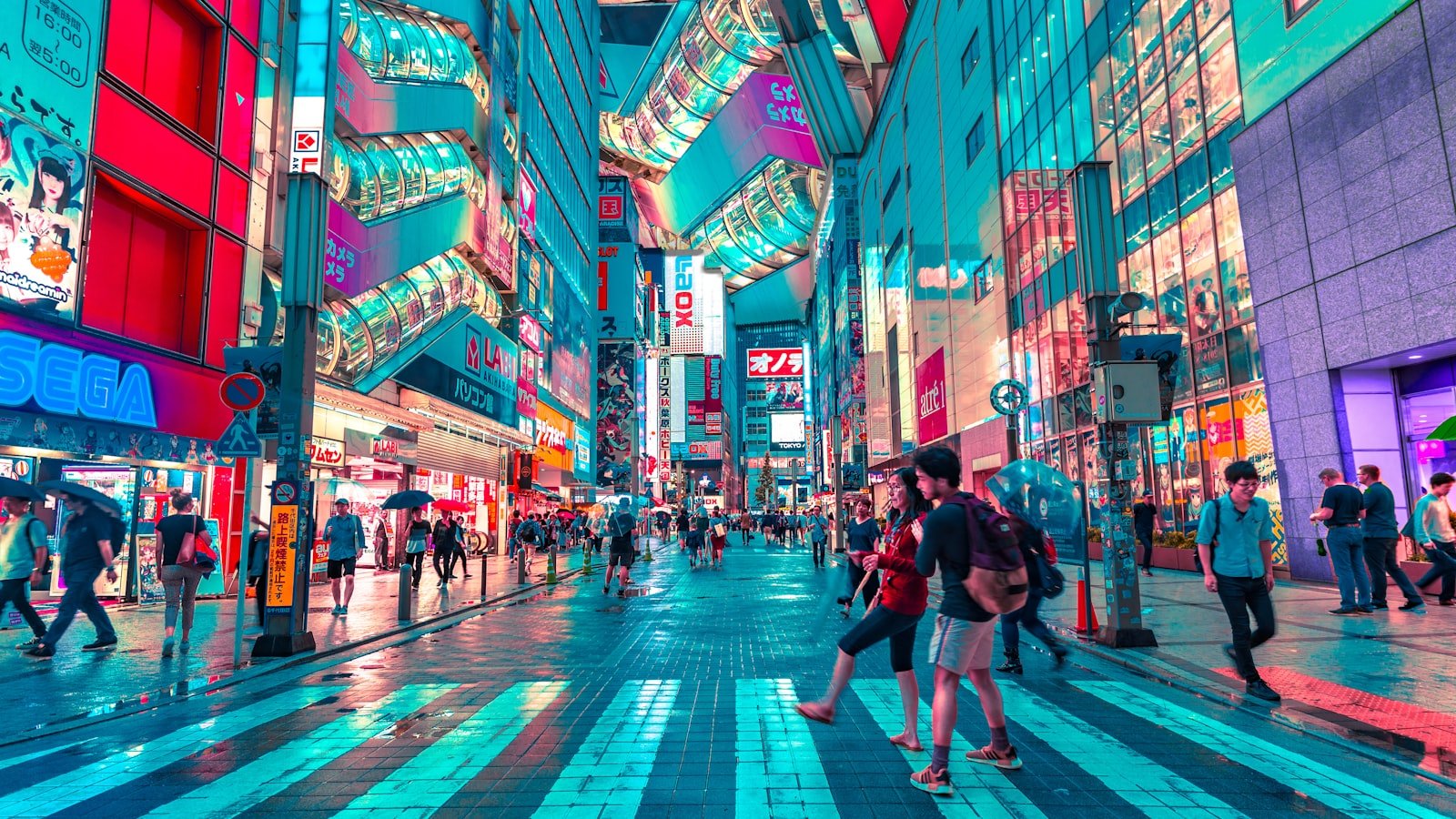
Tokyo is one of the safest, most orderly cities in the world, and that single fact shapes the honest answer to "how much does a bodyguard cost in Tokyo?" more than any rate card. You are almost never buying protection from crime on the street. You are buying trained, briefed personnel who move a principal cleanly through an immense, fast, exquisitely punctual city, from Haneda to a Marunouchi boardroom to a private counter in Ginza to a quiet ryokan-style suite, without friction, delay or exposure. That is what the fee actually covers, and it is what sets the price.
The Short Answer
For a single, professionally trained close protection officer in Tokyo, a realistic 2026 figure sits at roughly the yen equivalent of $700 to $1,200 for a twelve-hour day, before transport and coordination. Lower-profile, single-officer assignments can begin around the lower end of that band; the figure rises toward $1,500 and above for a higher-profile principal, a compressed schedule, or an event-facing detail that needs a second officer. A fully coordinated protection day, meaning officer, security-trained driver and vehicle, and the advance work that makes the day run without a hitch, starts from around 1,800 euro per day and scales with the complexity of the programme.
Tokyo sits below London or New York on raw officer rates, because the domestic security market is large, disciplined and competitively priced. What moves the total here is rarely the officer's day rate. It is the coordination: the advance work, the driver who knows the city's traffic rhythms, and the language and cultural fluency that turn a foreign principal's day into a Tokyo local's day.
Protection in Tokyo Is Unarmed, and That Is the Point
Firearms are the hard line to understand before anything else. Japan's Firearm and Sword Possession Control Law is among the strictest in the world, and civilian firearm ownership is effectively prohibited outside narrow sporting and hunting exceptions. Private security personnel do not carry weapons. Even Japan's largest security companies equip their guards with batons at most, and armed private protection simply is not a service that exists in the commercial market the way it might, under strict authorisation, in parts of the Gulf or the United States.
Far from being a limitation, this is the operating philosophy of protection in Japan, and a well-run detail leans into it. Security in Tokyo is delivered through meticulous advance planning, disciplined positioning, controlled access, secure transport and lawful de-escalation. The officer's value is in what never happens: the crowd never forms, the route never stalls, the unwanted approach never gets close enough to matter. In a country this ordered, that quiet competence is the entire product.
Japan does license and regulate its private security industry, with firms and personnel overseen by prefectural public safety commissions. The practical point for a client is simple: work through an established, properly insured provider, and let them coordinate openly with hotels, venues and, where the day warrants it, local police liaison.
What Actually Moves the Number
Language and cultural fluency. This is the single biggest driver of value in Tokyo, and the least visible on a rate card. An officer or coordinator who reads the room in Japanese, who understands the etiquette of a Ginza appointment or a kaiseki dinner, who can speak to hotel security and restaurant staff in their own language, delivers a categorically smoother day than an English-only operator working through gestures. Bilingual, culturally fluent protection commands a premium, and it is worth every yen.
Movements, not square footage. A principal based in a single Otemachi tower with controlled lobby access and one lift bank is a different footprint from a day spanning Shibuya retail, a Roppongi dinner and a late private club. Vertical buildings simplify some things and complicate others, particularly lift logistics and building-security handoffs. Protection is priced against the number and complexity of movements, not the size of any one venue.
Event exposure. A quiet business trip with three fixed points a day is a light programme. A product launch, a brand appearance, a fashion event, or a Grand Prix weekend at Suzuka, where the 2026 Japanese Grand Prix draws enormous crowds, is public-facing exposure with a footprint and a schedule that rarely holds. That is priced accordingly, frequently with a second officer or a dedicated venue liaison.
Notice and specificity. Tokyo's genuinely capable, bilingual close protection pool is smaller than its very large general guarding industry. Real lead time, a fortnight or more, lets us match the right officer to the profile. A same-week request narrows the field quickly, and price follows scarcity as much as skill.
Why the Cheapest Quote Costs More
Japan's guarding sector is vast: construction sites, retail, event stewarding, building security. Close protection is a small, specialised sliver of it. A static-trained guard rebadged as a "bodyguard" for the week may be perfectly competent at standing in a lobby and completely lost the moment a foreign principal's day deviates from plan, which it always does, and doubly so without the language to adapt in real time. The cheaper quote is real. So is what it fails to deliver the first time the itinerary shifts or a room full of people needs to be read quickly.
We put the scope in writing, meaning officer hours, vehicle and driver, advance work and coordination, so a client can read a quote line by line rather than accept a headline number on trust.
A Realistic Budget
For a typical visit, say a private arrival at Haneda, three or four fixed movements a day, dinners in Ginza or Azabu, perhaps a day of meetings across Marunouchi, one trained officer with a security-trained driver and vehicle is the correct baseline, budgeted from around 1,800 euro per coordinated day. Where the officer is bilingual and the day is culturally demanding, expect the upper part of the range. Public-facing programmes, launches or a Suzuka weekend justify booking well ahead and, for exposed events, a second officer.
For recurring visits, such as a quarterly regional headquarters trip or a family with a Tokyo base they return to, a standing arrangement generally prices better than repeated one-off bookings, and it means the same faces know the building, the routes and the principal's preferences, which matters more than the discount.
What a Coordinated Day Actually Includes
A coordinated protection day in Tokyo has concrete components. Advance work: the hotel or building's security team contacted ahead of arrival, lift and lobby procedures confirmed, timings tested against real traffic and, where useful, the city's superb rail network rather than a map estimate. The officer: trained, briefed on the schedule and the principal's preferences, dressed correctly for boardroom, counter or event, and ideally fluent in the language. The vehicle and driver: security-trained, positioned before the principal moves, never summoned after someone is standing at a Ginza kerb. Coordination: a single point of contact who owns the day end to end and adjusts as the schedule shifts, because it will.
What it does not include, for clarity: any armed capability, which does not exist in this market, and marine or aviation legs, which are scoped separately when a trip extends to a private aircraft movement or a domestic hop. Where a Tokyo stay connects to a wider itinerary across Kyoto, Osaka or on to Singapore and Hong Kong, those legs are planned as part of one continuous detail rather than handed off cold.
When to Book
For a routine business or family visit, ten days to two weeks' notice secures a strong, bilingual detail. For a major event, a launch or a Suzuka Grand Prix weekend, treat four to six weeks as the sensible floor. The genuinely capable pool is finite, and it is contracted early by people who plan ahead. If your programme is public-facing or involves a significant venue, start the advance conversation as soon as dates are fixed. The coordination work, not the officer's calendar, is usually the longer lead time.
Frequently Asked Questions
How much does a bodyguard cost per day in Tokyo?
For a single, professionally trained close protection officer in Tokyo, budget roughly the yen equivalent of $700 to $1,200 for a twelve-hour day, before vehicle and coordination, with higher-profile or event-facing work climbing toward $1,500 and above. A fully coordinated protection day, meaning officer, secure driver and vehicle, and the advance planning that holds the day together, starts from around 1,800 euro per day.
Can bodyguards be armed in Tokyo?
No. Japan's Firearm and Sword Possession Control Law is among the strictest in the world, and private security personnel do not carry firearms. Even the country's largest security companies equip guards with batons at most. Protection in Tokyo is built entirely on planning, positioning, secure transport and lawful de-escalation.
Do you actually need a bodyguard in Tokyo?
Tokyo is consistently one of the safest major cities on earth, so protection there is rarely a response to street crime. Clients engage it for privacy management around a high-profile visit, seamless movement across a dense and punctual city, event exposure such as a product launch or a Grand Prix weekend at Suzuka, and continuity with the security posture they keep in London, Geneva or New York.
Is hiring private security legal in Japan?
Yes. Japan licenses and regulates its private security industry, with firms and guards overseen by prefectural public safety commissions. A legitimate provider works through properly trained, insured personnel and coordinates openly with hotels, venues and, where appropriate, local authorities.
Planning Time in Tokyo?
Algoz coordinates close protection, secure transport and executive concierge across Tokyo as one discreet service, scoped against your actual schedule.
Request a Confidential Consultation