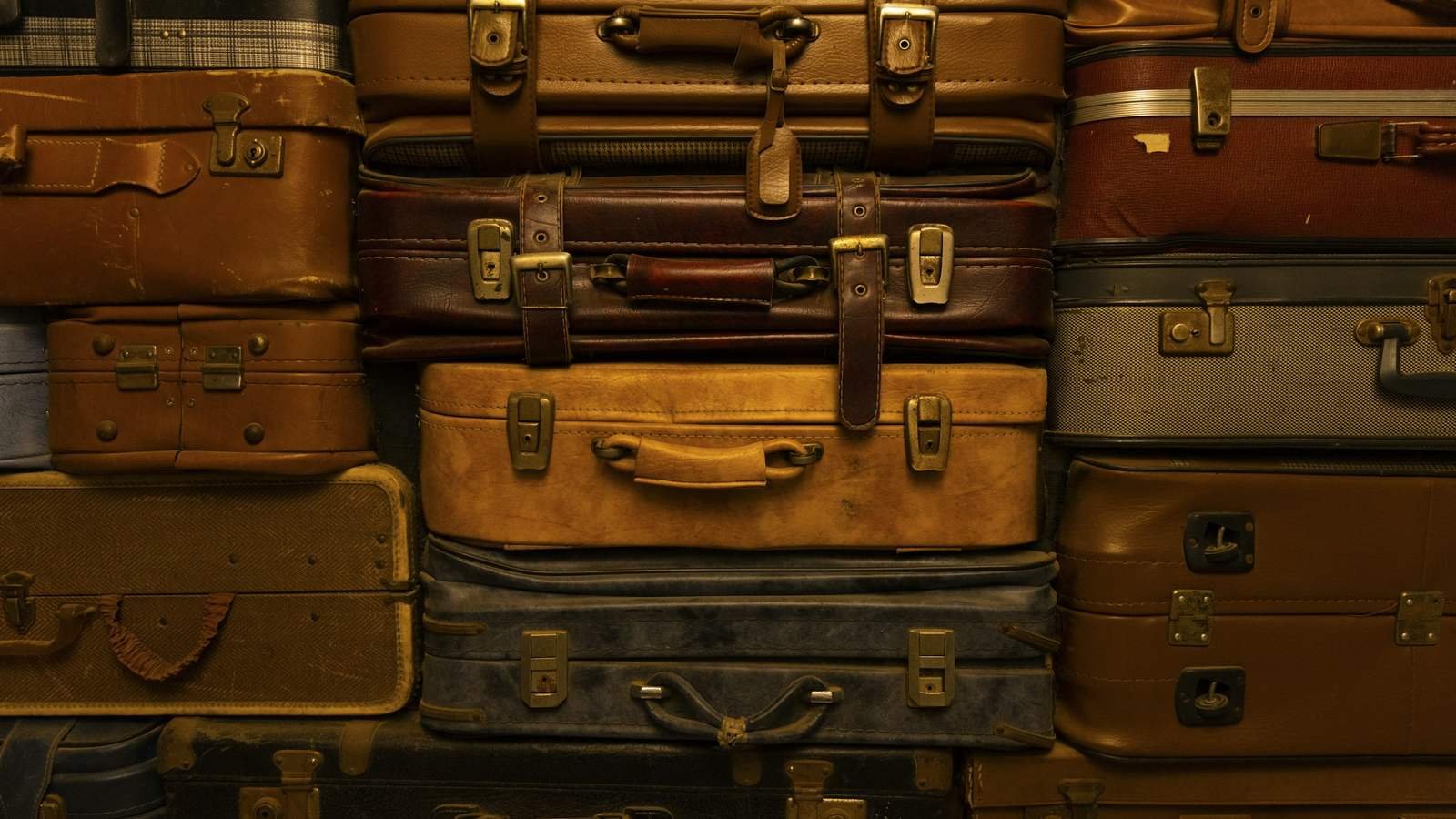
The most underrated luxury in travel is not a bigger seat or a faster car. It is walking through an airport carrying nothing: no roll-aboard to steer through a crowd, no equipment to wrestle onto a trolley, no carousel to stand beside at the end of a long flight. Luggage services make that possible. In the simplest terms, a door-to-door luggage service collects your bags from wherever you are and delivers them to wherever you are going, so the bags travel on their own itinerary and you travel on yours. Done properly, you leave home with a jacket and a small bag, and your wardrobe, your ski gear or your golf clubs are already hanging in the wardrobe or racked in the chalet when you arrive.
That is the whole idea. What follows is how it actually works, where it earns its place, and what we handle around it so the convenience never becomes its own small anxiety.
How door-to-door luggage services actually work
The mechanics are straightforward, which is part of the appeal. A courier collects the bags from your home, office or hotel at an agreed time. Each piece travels tracked and insured on its own routing, and is delivered directly to the destination address: a house, a hotel room, a yacht, a ski chalet. The established services in this market, among them Luggage Forward, LuggageToShip, ShipGo and Send My Bag, cover most of the world between them, with one comparison putting international coverage at more than 220 countries and territories and typical international transit at three to seven business days, dropping to one to three days on express major routes (Luggage To Ship).
Pricing is genuinely variable, and it is worth being clear-eyed about it. Published domestic rates start at around US$99 per bag and climb with weight, dimensions, distance, speed and the number of pieces (Luggage Forward). A single bag across a short domestic hop is cheap and barely worth the coordination; four heavy ski bags and a set of clubs moving internationally, timed to arrive before you do, is a different proposition entirely, and precisely the case where the service stops being a novelty and becomes the sensible way to travel.
The part that matters, and the part a booking website cannot do for you, is the timing. The bags should arrive before you, but not so early that they sit unattended, and someone at the destination has to be ready to receive them. That coordination, the collection window, the transit time, a confirmed pair of hands at the other end, is where a forwarded bag becomes a genuinely relaxed arrival rather than a parcel you are now nervously tracking on your phone from seat 2A.
Where it earns its place
Luggage forwarding is not for every trip, and we would never pretend otherwise. It earns its place in a few specific situations, and outside them it is simply an extra step.
The clearest case is equipment. Skis, boots, golf clubs, dive gear, a cello, anything bulky, awkward and expensive to schlep, travels far more comfortably ahead of you than beside you. Airlines charge for it, mishandle it, and occasionally lose it; forwarding it means it arrives in one tracked piece, ready to use, with none of the oversize-baggage theatre at check-in.
The second case is the long, multi-stop itinerary. A family moving through three cities over two weeks does not want to drag a fortnight's luggage through every lobby, train station and transfer. Sending the bulk ahead to the stops where it is actually needed, and keeping only a light case in hand, turns a heavy, fragmented trip into a series of clean arrivals.
The third is volume. Families travelling with children, or anyone whose trip genuinely requires more than they can carry with dignity, benefit most obviously. And the fourth is simply preference: some people place a real premium on arriving unburdened, and for them the calculation is emotional rather than logistical. All of these are valid. A single short trip with one bag is not one of them, and we will say so.
The one rule that matters: what stays with you
There is a single discipline that separates a smooth forwarded-luggage trip from a stressful one, and it is this: the irreplaceable travels with you. Passports and travel documents, medication, one change of clothes, and anything of genuine, hard-to-replace value stay in the bag on your shoulder, never in the case that has gone ahead.
This is partly common sense and partly a real distinction in how things should move. Ordinary luggage forwarding is insured and tracked, but it is still designed for clothes and equipment, not for a watch collection or a piece of high jewellery. Guidance across the secure-shipping industry is consistent on this point: high-value timepieces and fine jewellery frequently exceed the caps on standard shipping insurance and warrant dedicated, monitored handling rather than being treated as ordinary cargo (DHL). In practice that means anything genuinely valuable is not a luggage question at all: it is an asset transportation question, handled as a separate, secure movement with its own chain of custody. Keeping the two clearly apart is the quiet detail that makes the whole thing feel safe rather than merely convenient.
What we actually handle
When we arrange luggage services for a member, our role is not to resell a shipping label. It is to make the bags disappear from your list of things to think about entirely. We coordinate the collection window around your actual departure, choose the transit speed that lands the bags at the right time, ahead of you, but received by someone who is expecting them, and confirm a real point of contact at the destination, whether that is a villa manager, a hotel concierge, a chalet host or a member of the household. We track the movement so you do not have to, and if a stop changes or a flight moves, we adjust the routing rather than leaving you to renegotiate it mid-journey.
We also draw the line clearly between what travels as luggage and what does not. Documents, medication and a light overnight bag stay with you. Bulk clothing and equipment go ahead. Anything of real value moves separately and securely, on its own terms. That separation is deliberate, and it is the reason a forwarded-luggage trip through our coordination feels like one less thing rather than one more.
None of this is about extravagance. It is about arriving somewhere, a chalet before a ski week, a villa before a family summer, a suite before a working few days, and finding that everything you need is already there, hung up, unpacked or racked, while you walked off the aircraft carrying almost nothing. That feeling of arriving complete, unburdened and ready is the entire point of the service, and it is a surprisingly large part of what makes a journey feel effortless.
If you travel often enough that luggage has become a genuine friction in your life, we would be glad to take it off your hands. Visit algozgroup.com or explore our executive concierge service to see how the details come together.
Frequently Asked Questions
What is a door-to-door luggage service?
It is a service that collects your bags from your home, office or hotel and delivers them directly to your destination, another home, a hotel, a yacht or a chalet, so you travel without checking anything in or waiting at a carousel. The bags move on their own tracked itinerary, usually a day or more ahead of you, and are waiting when you arrive.
How much does luggage forwarding cost?
Published services start at around US$99 per bag domestically and rise with weight, distance, speed and the number of pieces; international door-to-door shipments typically take three to seven business days, with express options of one to three days on major routes. For our members we treat it as one line inside a wider journey rather than a standalone purchase, and confirm the real figure against the route before anything is booked.
Is it safe to send valuables and important items ahead?
The bags themselves travel insured and tracked, but the sensible rule is that irreplaceable items, passports, medication, one change of clothes, high-value jewellery or watches, stay with you. Anything genuinely valuable that needs to move separately is better handled as a dedicated secure asset movement, not ordinary luggage forwarding.
When is luggage forwarding actually worth it?
Most often for ski trips and golf trips where the equipment is bulky, for long multi-stop itineraries where dragging bags between cities is punishing, for families travelling with far more than they can comfortably carry, and for anyone who simply values arriving unburdened. For a single short trip with one bag, it rarely justifies itself.
Ready to Travel Light and Arrive Complete?
If luggage has become a genuine friction in how you travel, handing it over is one of the simplest upgrades we arrange. Everything you need, waiting for you, while you walk off the aircraft with nothing.
Speak With Us in Confidence