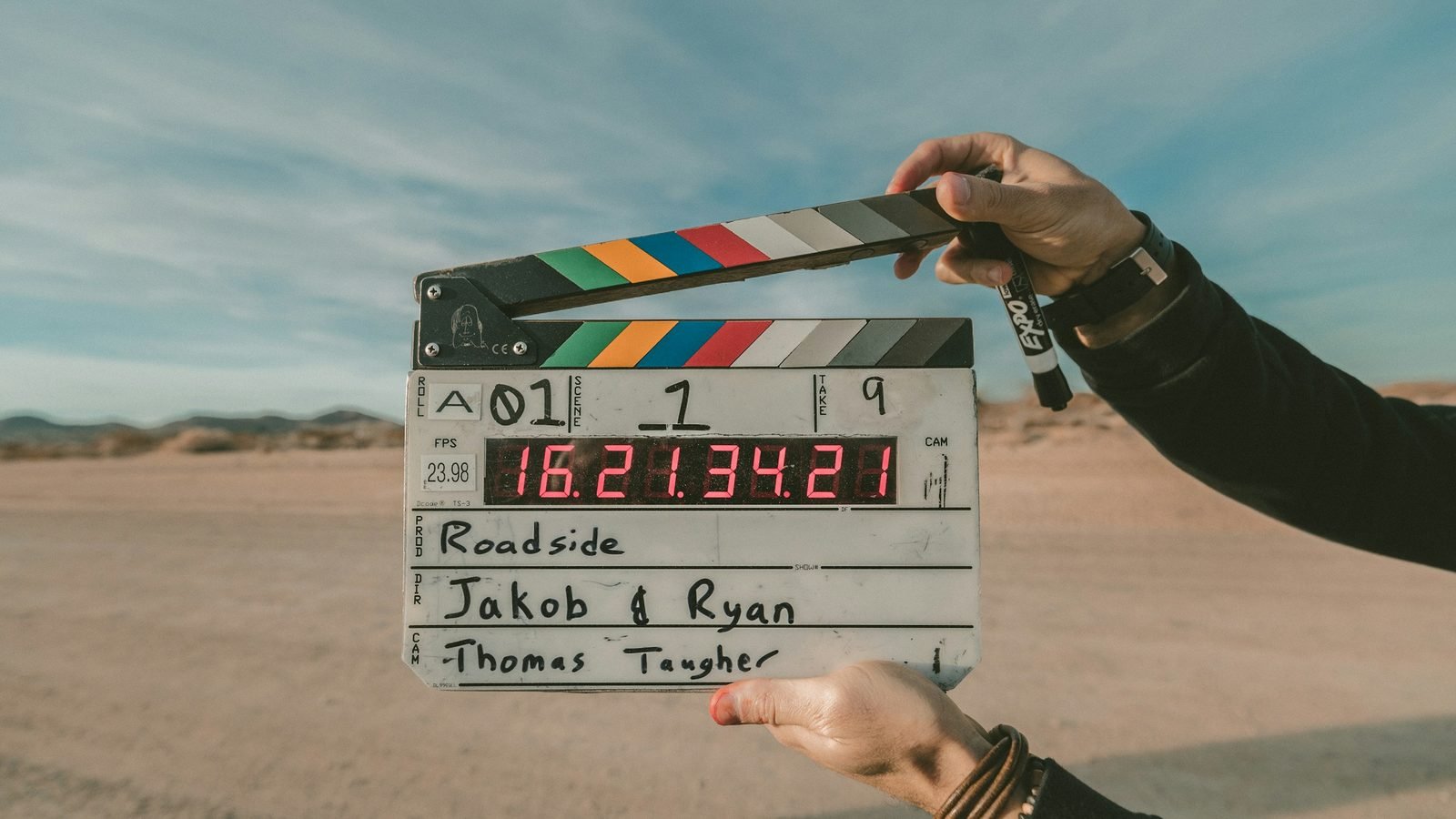
Watch a shoot that is going well and you will notice how little drama there is. The photographer or director is thinking about light and framing; the talent is where they need to be; the equipment is ready; nobody is arguing with an official or waiting on a permit that did not come through. That calm is not luck. It is the product of production support — the on-the-ground coordination that lets a shoot happen efficiently in a given place, covering location access, permits, local crew and suppliers, equipment and transport logistics, talent movement, and discretion around the whole thing. In plain terms, production support is everyone whose job is to make sure the only thing the creative team has to worry about is the frame. Get it right and the shoot looks effortless. Get it wrong and even a well-funded production grinds to a halt over something small and entirely preventable.
What production support actually covers
The work spans a wider range than the word "logistics" suggests. Location scouting and securing access come first — finding the right place and, crucially, obtaining the right to be there and to film. Permits follow, and they are rarely trivial: different jurisdictions have different authorities, timelines and conditions, and a rejected or late permit can collapse a shoot day. Local crew and supplier sourcing brings in the people and kit that do not travel with the production. Equipment and transport logistics move gear — sometimes across borders, where customs on professional equipment becomes its own discipline. Talent movement gets the people who matter to the right place at the right time. And scheduling wraps all of it around real-world conditions: weather, light, traffic, the rhythm of the location itself.
As one 2026 field guide on international production puts it, this coordination of local services, permits, crew and financing is precisely what enables productions to film efficiently across borders — and without it, even well-funded projects stall on permit rejections, customs holds and crew miscommunications (Video Production Switzerland). The support is not the glamorous part of a production. It is the part that determines whether the glamorous part ever happens.
Why a local partner changes the arithmetic
The case for engaging a local fixer or production support partner is not about outsourcing effort — it is about outcomes that are genuinely hard to reach from outside. A production landing cold in an unfamiliar city does not know which authority issues which permit, how long it really takes, which locations quietly say no to filming, or which supplier will actually show up. A well-connected local partner knows all of it as routine.
The timing of that engagement matters as much as the choice. Industry guidance is consistent: fixers should be brought in during development or early pre-production, so there is time to build permit applications, establish authority contacts and identify logistical risks before the shoot begins — not to firefight them once the crew is standing around on an expensive clock. The same discipline applies to permits directly; official film offices advise starting the permit conversation well ahead, with straightforward commercial work often needing a couple of weeks' notice and more complex productions needing far more (FilmLA). Treating logistics as something to design in advance, rather than react to on the day, is what separates a production that flows from one that lurches.
The luxury and lifestyle dimension
Not every shoot is a feature film. A great deal of the work at this level is commercial, editorial and private — brand campaigns, lifestyle content, marine and yachting shoots, productions built around a location, a property or a person. These bring their own requirements. A yacht shoot is a logistics problem wrapped in a maritime one. A shoot at a private estate or a sensitive venue turns on access and trust as much as on permits. A campaign built around a recognisable face needs talent movement handled with the same care as the filming itself.
What ties these together is that the location and the people are often the point, and both have to be handled with judgement rather than brute logistics. The best support in this space is cross-disciplinary — comfortable across stills and motion, at ease with both a technical crew and a private host — and fluent in the quiet requirements that come with shooting around wealth, property and profile.
Discretion is part of the job, not an add-on
For a good deal of the work we support, discretion is not a nice-to-have layered on at the end — it is a design principle from the first conversation. A private shoot at someone's home, a campaign a brand wants kept quiet until launch, a subject whose profile means attention is a problem rather than a bonus: all of these require the production itself to be low-profile.
That is achieved through controlled access, careful choice of location and timing, vetted local crew who understand the sensitivity, and — where a subject's profile genuinely calls for it — quiet coordination with a protective layer, handled so that it never becomes the story. The goal is a shoot that draws no attention it does not want: the machinery invisible, the subject undisturbed, and the footage the only thing that leaves the location. Where that security element is needed at all, it should be felt by no one and seen by no one.
What we actually handle
When we support a production for a member or their team, we sit in the coordinating role so the creative side does not have to hold the logistics in their heads. We help scout and secure locations and the access to film them. We manage permits and the local authority relationships behind them, started early enough to be a formality rather than a crisis. We source and vet local crew and suppliers, and we handle equipment and transport logistics, including the customs and movement considerations when gear crosses borders. We coordinate talent movement, and we build the schedule around the real conditions of the place — light, weather, access windows, the practical rhythm of the location. And we hold discretion across all of it, quietly bringing in a protective layer only where a subject's profile requires it, and only in a way that stays invisible.
We do not over-promise on timelines we have not confirmed against the jurisdiction, and we would rather flag a permitting reality early than let a shoot day depend on optimism. What we deliver is a production that runs the way a good shoot should: the crew concentrating on the work, the friction handled out of sight, and a location that received the production cleanly and let it leave the same way — much as a well-run private travel itinerary feels seamless precisely because of the coordination the guest never sees.
Frequently Asked Questions
What does production support actually cover?
The on-the-ground coordination that lets a shoot happen efficiently in a given place — location scouting and access, permits, local crew and supplier sourcing, equipment and transport logistics, talent movement, scheduling around real-world conditions, and discretion around the shoot. It is the connective work that keeps a production moving rather than stalling on a permit rejection or a customs hold.
Why hire a local fixer or production support partner?
Because the things that stall a shoot — permit applications, authority contacts, customs on equipment, crew miscommunication — are exactly the things a well-connected local partner handles as routine. Industry guidance is consistent that fixers should be engaged in development or early pre-production, so there is time to build permits and identify risks before the shoot, rather than reacting to problems once the crew is on the clock.
How far in advance should permits and logistics be arranged?
It depends on the jurisdiction and the scale, but earlier is always cheaper than later. For commercial and corporate work, the permit conversation is best started at least two to three weeks ahead where possible; more complex international productions want considerably longer to build applications, establish contacts and clear equipment. Late starts are where costs and cancellations come from.
How is discretion maintained around a private or sensitive shoot?
Through controlled access, careful choice of location and timing, vetted local crew, and quiet coordination with any protective layer where a subject's profile calls for it. The aim is a shoot that draws no attention it does not want — the machinery invisible, the subject undisturbed, the footage the only thing that leaves.
Have a Shoot That Needs the Logistics and the Discretion Handled?
Permits, local crew, talent movement and a location that receives the production cleanly — that is exactly what we arrange, so your team can concentrate on the work.
Speak With Us in Confidence