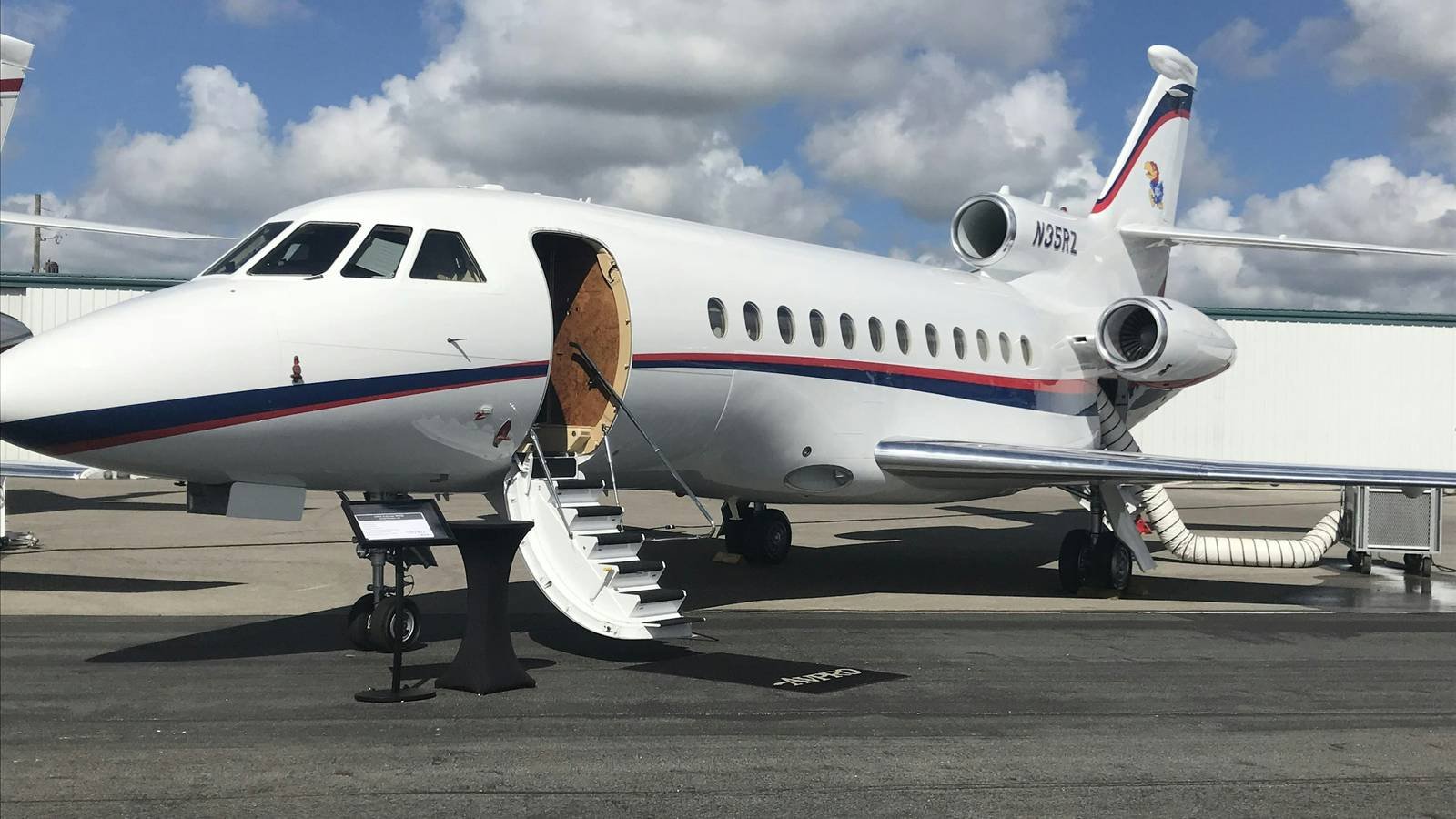
A private jet charter is often described, and often sold, as a single product: an aircraft, a route, a price. Treated that way, it is genuinely just a more expensive way to move between two airports. Treated as one component inside a whole journey — timed against a dinner reservation, coordinated with ground transport, sequenced around a client's actual schedule rather than an operator's availability — it becomes something considerably more useful. That distinction is the difference between booking a flight and arranging a journey, and it is how we approach every charter we coordinate.
The aircraft is a variable, not the starting point
The first question in arranging a charter is rarely "which aircraft." It is what the trip actually requires: how many passengers, how much luggage, whether the route needs a stop for fuel or can be flown direct, and — often decisive — which airports are close enough to the actual destination to save the hours that commercial routing loses to hub-and-spoke geography. Only once those requirements are clear does the aircraft category get chosen, and even then it is chosen as the right tool for that specific leg, not a default preference for something larger or newer than necessary.
The private jet charter market has continued to grow steadily through 2026, valued at roughly $17.67 billion this year against a backdrop of rising demand for jet-card programmes and more sophisticated real-time pricing tools industry-wide, with the sector projected to reach nearly $26 billion by 2031 (market research reporting). That growth has brought more aircraft categories and more operators into practical reach for most routes, which makes matching the aircraft to the mission — rather than defaulting to whatever is available — more achievable than it used to be.
What charter actually costs, in real terms
Pricing is where most people's assumptions about private jets are furthest from reality, in both directions. Current 2026 guidance puts light jets at roughly $2,500 to $4,000 per flight hour, midsize jets between $4,000 and $8,000 per hour, and heavy or ultra-long-range aircraft from around $8,500 per hour up past $20,000 for the largest cabins on long-haul missions. On top of the headline hourly rate, fuel surcharges typically add another 10–15%, and positioning costs — flying the aircraft to the departure airport before the client ever boards — along with crew and airport fees can add a further 25–40% to the total. We keep those figures in AED terms internally when quoting Algoz-arranged charter alongside the rest of a journey, but the underlying hourly benchmarks are set globally in USD and move with fuel and operator capacity, not with any single market.
None of this is a fixed number we can promise in advance of a specific route and date — pricing depends on aircraft availability, positioning distance, season, and current fuel costs at the time of booking. What we can promise is that a quote reflects the actual route and aircraft, not a marketing floor designed to get a conversation started.
Empty legs: real value, with a real trade-off
An empty leg is a flight an operator already has to fly — repositioning an aircraft back to its base, or moving it to where its next paying charter begins — offered to a client at a steep discount because the alternative is flying that same route with no passenger revenue at all. Reported discounts on empty legs commonly run from 40% to as much as 75% off the standard charter rate for that route (empty leg market analysis).
The catch, and it is a real one, is that an empty leg follows the operator's schedule, not the client's. The date, the time, and the exact routing are fixed by whatever repositioning move the aircraft was already going to make. For a flexible traveller — someone who can adapt their dates to the flight rather than the other way around — that trade-off can represent genuinely excellent value. For a fixed-date journey built around a specific arrival time, an empty leg is either a lucky match or not available at all, and a standard charter remains the more reliable option. We track empty-leg inventory for members who tell us their dates have real flexibility, but we do not force-fit an empty leg onto a schedule that cannot actually absorb its constraints.
Arranging the charter as part of the whole day
Where charter genuinely earns its cost, in our experience, is not the flight itself but everything the flight makes possible around it. A car already waiting at the aircraft steps rather than at a general terminal pickup point. A departure time chosen to land a guest at a civilised hour rather than the middle of the night. A connection between two private legs timed tightly enough to save real hours, but not so tightly that a short weather delay collapses the rest of the day. None of that comes from booking an aircraft in isolation — it comes from designing the flight as one piece of a private travel itinerary built around the person travelling, with the ground transport, the arrival, and the rest of the schedule considered at the same time, not booked separately afterward.
This is also where discretion is easiest to build in without it becoming visible. Fixed-base operators away from commercial terminals, arrival timing that avoids predictable exposure, and ground transport that meets a guest at the aircraft rather than in a public arrivals hall are all standard features of a well-arranged charter — quiet by design, not an added extra.
What we do not promise
We do not promise a specific price before a route, date and aircraft are confirmed, because none of the operators we work with could honestly promise that either — charter pricing moves with fuel costs, seasonal demand, and aircraft positioning in ways no one controls. We do not promise that a preferred empty leg will exist for a fixed date; if the schedules do not align, we say so rather than force a compromise that would frustrate a client on the day. And we do not present the aircraft as the point of the journey. It is the instrument that makes a well-designed journey possible — the actual point is always the day it serves.
If you are planning a trip where the flight needs to disappear into the background of a well-run day rather than become the day's main event, we would be glad to arrange it. Visit algozgroup.com or explore our executive concierge service to see how aviation fits into the wider picture.
Frequently Asked Questions
How much does private jet charter actually cost?
It varies significantly by aircraft category and route. Industry pricing guides for 2026 put light jets at roughly $2,500–4,000 per flight hour, midsize jets at $4,000–8,000 per hour, and heavy or ultra-long-range jets from around $8,500 up to $20,000-plus per hour, before fuel surcharges and positioning costs. The aircraft is only one line in a full journey's cost — ground transport, staffing and timing around it add to the total.
What is an empty leg and is it actually good value?
An empty leg is a repositioning flight an operator needs to fly anyway — to return to base or reach its next booking — offered at a discount because the alternative is flying it with no paying passenger at all. Reported discounts commonly range from 40–75% off standard charter rates. The trade-off is fixed timing: an empty leg follows the aircraft's schedule, not the client's, so it suits flexible travellers more than a fixed itinerary.
Is chartering a private jet always faster than flying commercial?
Not automatically, but it is more controllable. The time saved comes less from the flight itself and more from skipping commercial terminal processes, choosing exact departure times, and flying into smaller airports closer to the actual destination — which collectively can save meaningful time on a complex, multi-stop itinerary even when the flight hours themselves are similar.
Does chartering a jet mean the whole trip is arranged, or just the flight?
On its own, a charter booking is just the flight. Arranged as part of a coordinated journey — which is how we approach it — the aircraft, the ground transport, the arrival timing, and the rest of the itinerary are designed together, so the flight supports the day rather than dictating it.
Should the Flight Disappear Into a Well-Run Day?
Arranged as one part of a journey designed around you — the aircraft, the ground and the arrival considered together, quiet by design. If that is how you would rather travel, we would be glad to arrange it.
Speak With Us in Confidence