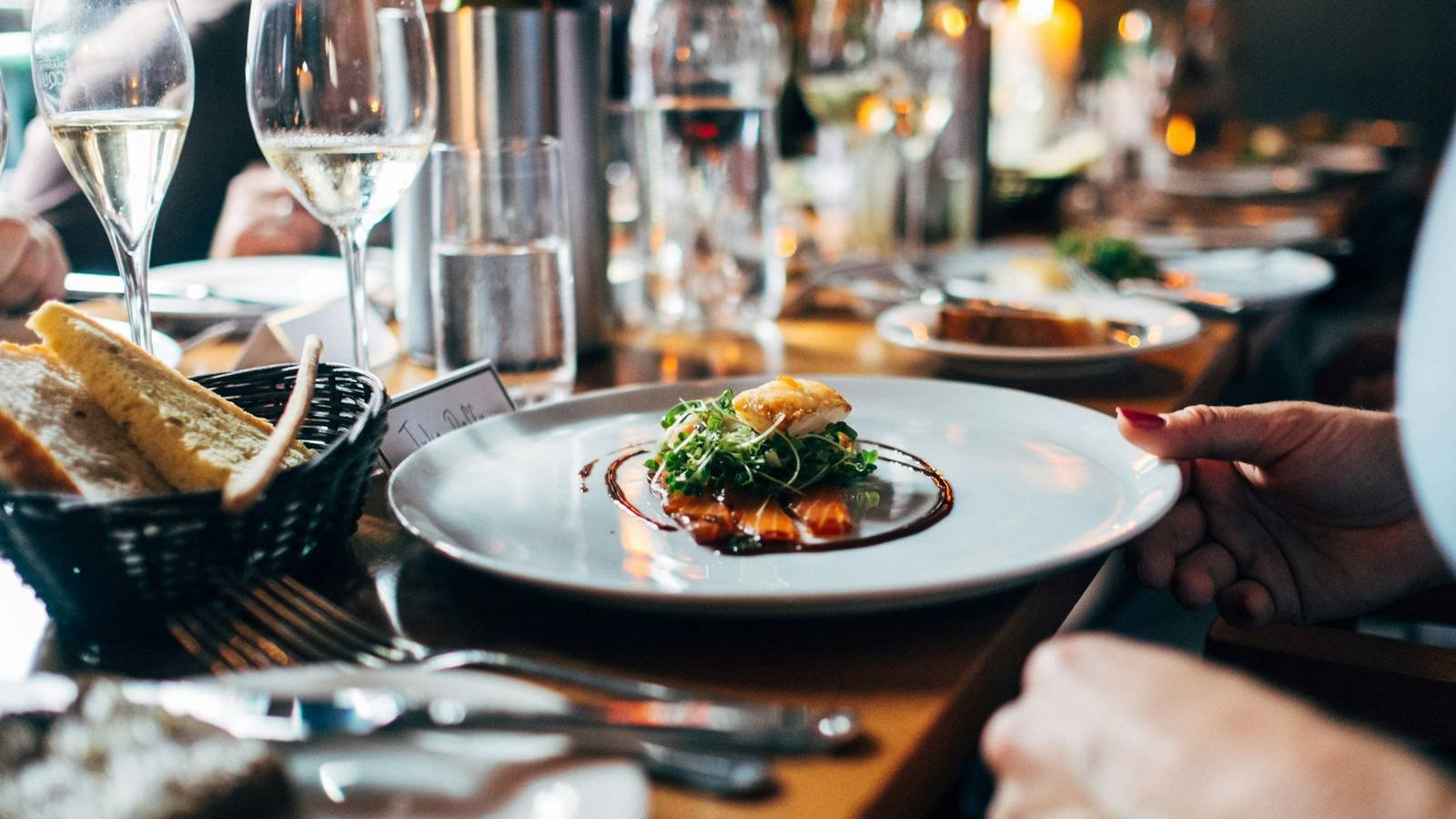
A private concierge recommends the right restaurant, hotel suite and route by weighing who you are, what the occasion demands, and what a specific place is genuinely like on that night - not its reputation or its star rating. That judgement is what makes a private concierge recommendation worth having, and it is the entire discipline behind what we do. Curation is the quiet work that sits underneath every suggestion we make. It is the work of knowing not just what is good, but what is right for a particular person on a particular evening, and being willing to reject the obvious, famous or expensive answer when it does not fit. Most of what we do is invisible by the time it reaches a member: a single confident suggestion, arrived at after a great deal of quiet judgement they never see.
We think this is worth explaining, because "curation" has become one of the most overused words in luxury, usually meaning nothing more than a shortlist someone was paid to publish. When we say we curate, we mean something narrower and more demanding: that every recommendation we put in front of a member is one we would make for someone we cared about, chosen on their behalf and answerable only to them.
A recommendation is a decision, not a list
The difference between information and curation is the difference between a search engine and a good friend. Anyone can produce a list of the best-rated restaurants in a city; the list is free and largely useless, because it does not know who is asking or why. A recommendation is a decision made on someone's behalf - and a decision requires knowing the person, the occasion and the place well enough to be right.
When a member asks us where to have dinner on their first night in a city, we are not consulting a ranking. We are weighing a dozen things at once: whether they want to be seen or left alone, whether this is a celebration or a working meal, whether they are tired from a long flight and would be better served by something calm and close to the hotel than something brilliant and forty minutes away. The famous three-star tasting menu is sometimes exactly right and sometimes precisely wrong, and knowing which is the entire job.
Why we say no to famous names
We turn down the obvious answer more often than we offer it. A restaurant that photographs beautifully and books out months ahead can be loud, rushed and indifferent to anyone it does not recognise - a poor choice for a quiet anniversary, however impressive the name. A hotel that dominates every "best of" list can be exactly wrong for a member whose entire priority is not being noticed. Fame is a fact about a place's marketing, not about whether it will serve a particular person well on a particular night.
Saying no to the famous name is uncomfortable, because the famous name is the safe recommendation - nobody blames a concierge for suggesting the restaurant everyone has heard of. But safe is not the same as right, and our job is to be right. When we steer a member away from the obvious choice, it is because we know something specific about the place or the night that makes it the wrong fit, and we would rather explain that plainly than hand over a recommendation we do not believe in.
The table
Choosing a table is a smaller and more precise craft than choosing a restaurant. Within the right room, there is a right table - and a wrong one. The corner banquette that lets a couple see the room without being in it. The table far enough from the kitchen pass and the service station that a conversation can actually happen. The quiet upstairs room a restaurant keeps for guests who would rather not be in the window. A member rarely knows these distinctions exist; part of arranging a reservation properly is making them without being asked.
This is why we care less about simply securing a reservation than about securing the right one. Getting a table at a difficult restaurant is a logistics problem, and a solvable one. Getting the table that will make the evening feel the way the member hoped it would feel is a judgement problem, and it depends entirely on knowing the room. A booking confirmed is not the same as an evening designed.
The suite
Hotels are ranked by stars and rooms are sold by category, and neither tells you what actually matters once you are inside. Two suites at the identical published rate, in the same hotel, on the same night, can be completely different experiences. One looks onto a quiet courtyard; the other onto a service road. One sits a discreet few steps from a private lift; the other is beside the ice machine and the housekeeping cupboard. One has the light in the morning; the other never does. The category name is the same. The stay is not.
Knowing a building well enough to ask for a specific suite by number - not a category, but the actual room - is the difference between booking a hotel and arranging a stay. It is knowledge that only comes from having been there, or from a relationship with the people who run the floor, and it cannot be reconstructed from a website. When we place a member in a particular room, it is a choice, made for reasons they will feel without ever having to think about. Discretion at arrival, the right aspect, genuine quiet: these are the things that decide whether a stay feels effortless, and none of them appear in the star rating.
The route
The route is the most overlooked of the three, and often the one that sets the tone for everything else. The drive from the airport is the first twenty minutes of a trip, and it can be the difference between arriving calm and arriving frayed. A route is not simply the fastest line on a map. It is the road that avoids the sporting event letting out, the approach that reaches a hotel's private entrance rather than its lobby scrum, the timing that misses the school run and the evening crush.
Good route planning is quiet, unglamorous and entirely felt rather than seen. The member notices only that the car was where it should be, that the journey was smooth, that they arrived without friction. They do not see the checking of the day's events, the alternative already held in reserve, the driver briefed on the entrance to use. Where a journey also carries a security consideration, the same discipline of planning routes and alternatives is one we take seriously as part of our wider close protection work - but for most members, on most days, it is simply the difference between a good arrival and a tense one.
Why curation cannot be bought
There is a version of this business in which recommendations are for sale - where a venue pays to appear on a list, and the list is presented to clients as curation. We do not work that way, and we are candid about why. The entire value of a recommendation rests on its independence. The moment a suggestion is influenced by who paid rather than what fits, it stops being advice and becomes advertising, and the member is right to disregard it.
So we keep the two things completely separate. What we recommend is what we would choose, for that member, on that occasion - nothing more and nothing less. It is the same principle that runs through all of our executive concierge work: the member's interest is the only interest we serve, and a recommendation that answers to anyone else is not worth making.
The point of getting it right
The industry's own research keeps arriving at the same conclusion: what the discerning traveller increasingly wants is not more choice but better judgement - trips and stays that feel considered rather than assembled, as Virtuoso's 2026 Luxe Report describes in its portrait of a more thoughtful, space-and-meaning-led luxury (Virtuoso 2026 Luxe Report). Choice, on its own, is a burden. What relieves it is someone who knows enough to decide well on your behalf.
That is what curation is for. The table that is simply right. The suite that feels like it was chosen for you, because it was. The route that delivers you calm. None of it announces itself, and that is the point - the work disappears into the ease of the result. If you would like the deciding handled by someone who will only ever recommend what genuinely fits, speak to us, and we will start by getting to know what right means for you.
Excellence, Discreetly Delivered.
Recommendations Answerable Only to You
The right table, the right suite, the right route - chosen for the person, not for the list. Speak with us about what a genuinely curated concierge relationship looks like.
Speak With Us in ConfidenceFrequently Asked Questions
How does a concierge decide which restaurant, hotel or route to recommend?
Through judgement built on first-hand knowledge, not a directory. A good recommendation weighs who the member is, what they want from that particular evening or stay, and what a specific place is genuinely like on a given night - its table spacing, its noise, its service under pressure - rather than its reputation or its marketing.
Why would a concierge recommend a lesser-known place over a famous one?
Because the famous name is not always the right one for the person or the moment. A three-Michelin-star room can be the wrong choice for a quiet anniversary; a hotel everyone photographs can be the wrong choice for someone who wants not to be seen. Curation means matching the place to the person, which frequently means saying no to the obvious answer.
What makes one hotel suite better than another beyond the star rating?
Position, privacy and quiet. Two suites at the same price in the same hotel can be entirely different experiences depending on which floor they sit on, what they look onto, how far they are from the lift and service areas, and how discreet the arrival is. A star rating tells you almost none of this; someone who knows the building does.
Does Algoz accept payment to recommend particular venues?
No. Algoz recommendations answer to the member, not to a venue. The value of a recommendation collapses the moment it is for sale, so we keep the two entirely separate - what we suggest is what we would choose for you, not what someone paid to place in front of you.