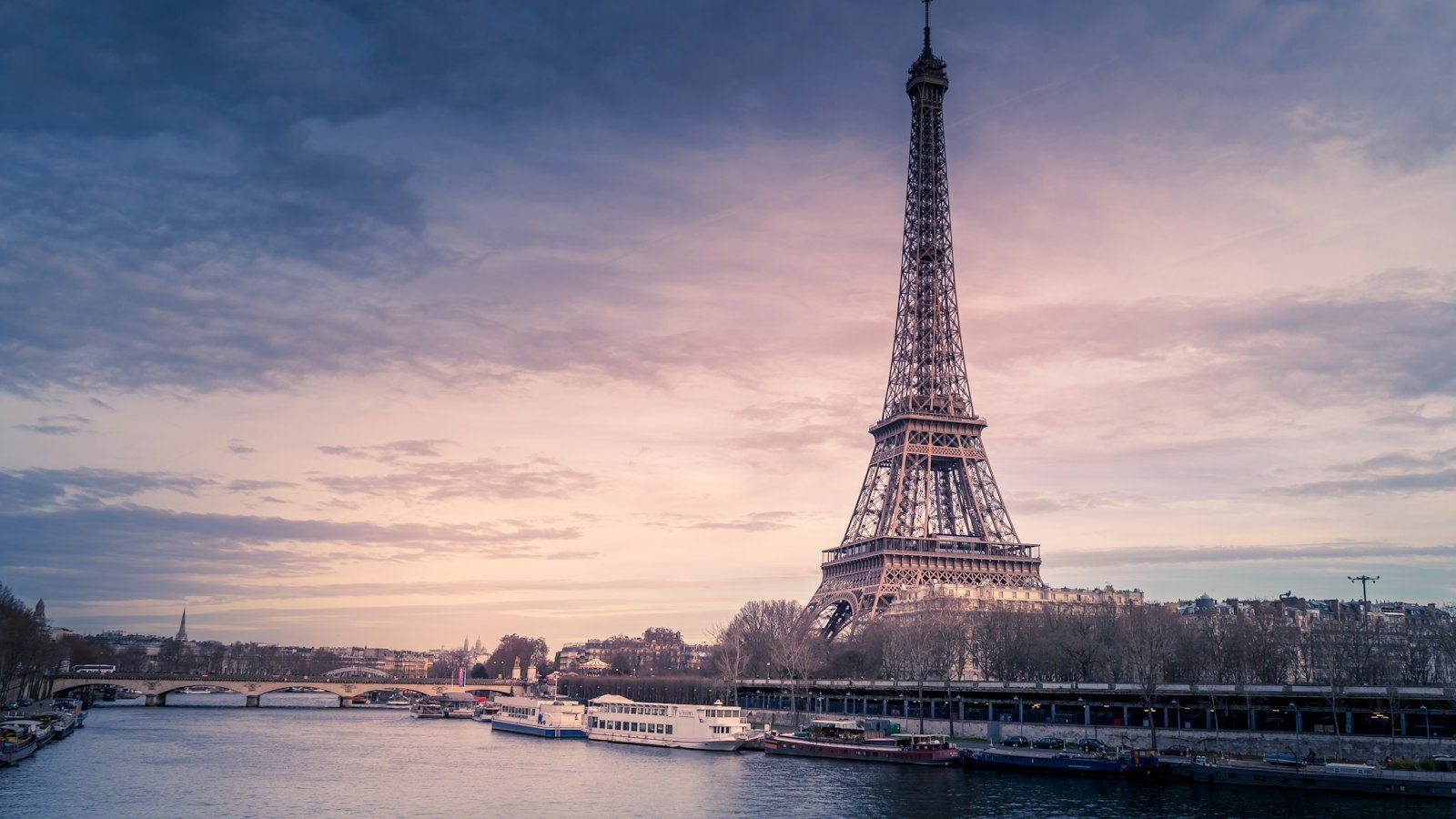
Paris is the city where our clients most often ask for protection for the first time. Not because it is dangerous, it is one of the safest big cities in the world for a visitor, but because wealth is read quickly here, the districts that matter sit within a few square kilometres that every photographer and every pickpocket knows, and the calendar packs the same people into the same hotels in the same weeks. A principal who has never thought about a bodyguard in Paris thinks about one the morning after a watch is taken from a wrist on Avenue Montaigne.
This guide is what we tell those clients. It is written for the person who will hire, or whose assistant will hire, and it covers the four things that actually decide the outcome: who is allowed to do the work, what it costs, who the officer is, and when in the year it matters most.
First, the only legal test that counts: CNAPS
France regulates close protection more tightly than almost any country in Europe. Under Livre VI of the Code de la sécurité intérieure, the person beside you must hold a carte professionnelle issued by CNAPS, the Conseil national des activités privées de sécurité, for the activity called protection physique des personnes. The company that supplies that person must hold its own CNAPS authorisation for the same activity. A company authorised for guarding, event stewarding or residential security is not authorised for close protection; the activities are separate, and the card for one does not cover the other.
Two consequences follow, and both surprise visitors. The first is that the bodyguard who travels with you from London, New York, Riyadh or Moscow cannot lawfully work the detail in Paris. A UK SIA licence, a US state permit and a Gulf security card authorise nothing on French soil. Your own protector is welcome to travel, to coordinate and to sit in the car; the officer who does the work has a French card. The second is that an engagement with an unlicensed protector exposes the client as well as the provider, and any insurance written on that detail is void when it is needed.
So the verification is simple, and you should do it before your name is shared with anyone. Ask the provider for two numbers: the company's CNAPS authorisation for protection physique des personnes, and the personal card number of the officer who will be beside you, valid on your dates. Both can be checked with CNAPS. A provider who hesitates has answered the question. Our official partner in France is 1831 Prétorien, CNAPS authorisation AUT-006-2124-09-09-20250998257, SIRET 989 019 013 00014; where another authorised company delivers a detail, its numbers come with the proposal.
What one officer costs in Paris in 2026
The published base is from EUR 950 a day for one CNAPS-carded close protection officer on twelve-hour cover for a single principal. That figure buys the officer, the planning and venue advance for your itinerary, hotel liaison, an NDA signed before your name reaches the officer, and one contact from proposal to wheels-up. Longer days are quoted by the hour.
What sits on top is where budgets go wrong, so it is worth listing. The security driver and vehicle are quoted separately by the day. A second officer for a long event day, overnight cover at the hotel or residence, and venue advances for a recognisable principal are quoted to the brief. Armed protection in France is authorised case by case and needs a minimum 30-day lead, and most Paris details are correctly unarmed. Armoured vehicles, Fashion Week dates and Art Basel week sit above the base and are reserved early. For the wider market picture, our France cost guide and what a bodyguard costs go further.
One day is a normal booking. A jewellery appointment on Place Vendôme, a show, a dinner, a clinic visit, an arrival and transfer: a single twelve-hour day with one officer is the most common Paris engagement we run, and nobody should be told that protection only makes sense for a week.
Who the officer actually is
The Paris market holds some of the best close protection talent in Europe and some of the worst, often listed on the same platforms at similar prices. The officers worth having share a background: the Foreign Legion, the special forces, the police protection units, and a decade in private details since. They hold the card, they work in plain tailoring that belongs in a palace lobby, and they read a room without appearing to watch it. The second thing they share is language. Most Paris principals do not speak French, and an officer who cannot run the day in English, Russian or Arabic is a bodyguard you cannot brief. We select for French and English as the minimum, assign Russian, Arabic, Italian, Spanish or Portuguese speakers where the brief asks, and offer female officers for families and for a spouse's shopping week.
What the officer is not is a chauffeur. Which brings us to the part of a Paris detail that most people get wrong.
The driver does more of the real work than the bodyguard
Paris exposure is not on the pavement. It is at the hotel entrance where photographers and opportunists wait, in traffic on the A1 from Charles de Gaulle, in the arrivals hall where unlicensed taxi touts work the crowd, and around predictable arrivals at shows and restaurants. An officer who is parking the car is not protecting you, and a principal walking from a taxi rank to a palace door is at the most visible point of the day. The answer is a security-trained driver with an executive vehicle who keeps the car at every door, knows which hotel entrance is actually used, and holds the vehicle close through the Golden Triangle so purchases go into the boot and not under the principal's arm. For most Paris briefs the honest proposal is one officer and one driver; for a quiet business trip it is sometimes the driver alone, and we say so. Our piece on how a security driver works explains the discipline.
The weeks that need protection, with dates
Paris compresses its visitors into a few weeks, and those weeks are when officers, drivers and palace rooms are reserved months ahead. The dates to plan around now: Art Basel Paris at the Grand Palais, 23 to 25 October 2026, with preview days on the 21st and 22nd; Menswear Fashion Week, 19 to 24 January 2027; Haute Couture, 25 to 28 January 2027; Womenswear Fashion Week, 1 to 9 March 2027; Roland-Garros, main draw 23 May to 6 June 2027; Menswear again, 22 to 27 June 2027; Haute Couture, 5 to 8 July 2027; Womenswear, 27 September to 5 October 2027. December concentrates jewellery and watch purchases in the Golden Triangle exactly when the streets are fullest, and a recognisable principal at any of the fashion weeks needs two officers in rotation, a driver and venue advances rather than one person at the door.
Outside those weeks the quieter categories still earn their place: business travel where confidentiality outweighs visibility, arrivals at Charles de Gaulle and evening movement between the 8th, Saint-Germain and the restaurants, and families, where the value is simple: the children look at the Eiffel Tower while someone else watches everything approaching them.
What actually happens to visitors, and what the officer does about it
Violent crime against visitors in central Paris is rare. Quick, practised theft is common and predictable. Pickpocket teams work Métro Line 1 and the RER B from the airport, the Pyramid queue at the Louvre and the Trocadéro steps. The petition and gold-ring routines run around the Tuileries and the Eiffel Tower. Watches are taken from wrists by riders on scooters in the 8th and the 16th, and phones from café terraces by a hand from the pavement. None of it is dangerous and all of it is avoidable: the car replaces the Métro, the officer stands between you and the approach at the Pyramid, and the terrace table is chosen for the wall behind it.
Are there no-go zones? Not for a visitor with a car and an officer. Late at night a visitor without a driver is better off avoiding the area around Gare du Nord, Barbès and Stalingrad, the Châtelet-Les Halles RER hub and the last Métro; with a security driver none of those places is on the route. France has also kept its Vigipirate plan at a high level for years, which means visible patrols, bag checks at venues and occasional closures with little notice. For a protected visitor that changes timing more than risk, and the officer plans the day around it. Our Paris safety guide covers the wider picture, and Is Paris safe for Americans? reads the State Department's position.
How a Paris detail is actually run
We start from the itinerary, never from a headcount. The dates, the venues, the profile and the season are read together and we propose the smallest team that genuinely covers the brief. Every venue is walked or verified before you arrive: the entrance actually used, the holding position for the car, the exit that avoids the photographers, the floor and lift plan at the hotel. Every officer is NDA-bound before the first name is shared. One contact carries the engagement from proposal to wheels-up, and the same contact books the tables, the shopping appointments and the private museum entries through our Paris concierge desk, so the detail and the day are one plan rather than two. Seven days notice is the honest lead time; under 48 hours is an urgency case with an additional fee and no guarantee.
The five mistakes we see most
Hiring a guarding company for close protection, because the price was good and the word security was on the website. Bringing a bodyguard from home and assuming a foreign licence travels. Booking at 48 hours for Fashion Week and discovering that every carded officer in Paris was reserved in the summer. Choosing on the hourly rate and getting the officer who does not speak your language, in a suit that does not belong in the lobby. And skipping the driver to save a line on the quote, then spending the stay at the most visible point of every movement, the pavement between a taxi and a door.
The alternative is not complicated: two CNAPS numbers checked before your name is shared, one officer who speaks your language, one driver who knows the city, seven days notice, and a plan built from your itinerary. That is how to hire a bodyguard in Paris and remember the trip for the right reasons.
Need Close Protection in Paris?
CNAPS-licensed officers and security drivers from EUR 950 a day, in French, English, Russian and Arabic, with one contact from Le Bourget to the last dinner.
Close Protection in Paris